Blog•September 16, 2026
Online Shopping Scams: 5 Red Flags to Know Before You Check Out

For many Filipinos, a credit card can feel a bit scary. Unlike cash that you can physically hold and see when it’s running out, a credit card doesn’t give that same limit feeling, boss. It’s easy to keep swiping without realizing how much you’ve already spent.
A credit card is like utang muna, bayad later. It lets you pay for purchases even if you don’t have cash on hand. Sounds like a great benefit, right? But this benefit comes with a catch: if you’re not able to pay it back fully, you end up paying extra. That’s called interest.
In this guide, you’ll learn the basics of credit card interest, how it’s calculated, how to avoid interest, and the key terms you should know.
Interest is the extra money you need to pay back when you borrow from banks or lending companies.
When you use a credit card or take a loan to buy an item, you don’t just pay back what you spent. You pay a little more, and that extra is called interest. Think of it as the fee charged by banks and lending platforms for letting you pay for your item later.

Interest is usually a small part of what you owe, and it’s calculated over time. The longer you take to pay, the more it will add up. The faster you pay, the less interest you’ll have.
Just remember, boss: the sooner you pay back what you owe, the less extra you’ll need to pay.
Haven’t used your credit card yet? No interest to worry about, boss. 👍 Interest is tracked once you use your card, but you won’t be charged as long as you pay in full by your due date.

Your credit card interest is usually computed daily, but you will only see the amount once your statement comes at the end of the month.
Once you get your statement, you usually have around 20-25 days before the due date. During this time, no interest is charged as long as you pay the full amount by your due date.
Here are some common credit card terms that you’ll see when using your card. Knowing what they mean can help you better understand your bill and manage your payments, boss:
Here is a simple formula for how interest is usually calculated:
👉 Interest = Balance × Daily Rate × Days
Balance – how much you owe
Interest rate - % charged by the bank (per month)
Days – how many days you didn’t pay
Let’s look at this example:
Now, the interest will be:
₱5,000 × 0.1% × 10 days
👉 Interest = ₱50
Just remember, boss:

So, what should you do?
You need to wait for your statement, then check how much you need to pay.
✔️ Best case: Pay in full so you don’t get charged interest
✔️ If you can’t: Try to pay more than the minimum amount
The exact interest you need to pay depends on how much you spend for the month, and how long you take to pay it back, boss.
Example:
You spend ₱3,000
Interest: 3% per month (you can find this in your statement)
If you repay in 90 days:
👉 ₱3,000 × 0.1% (daily interest) × 90 = ₱270 interest
The faster you pay it off, the less interest you’ll pay.
Yes, boss. To avoid interest and any credit card charges, just pay the total amount due (shown on your statement) on or before your due date.
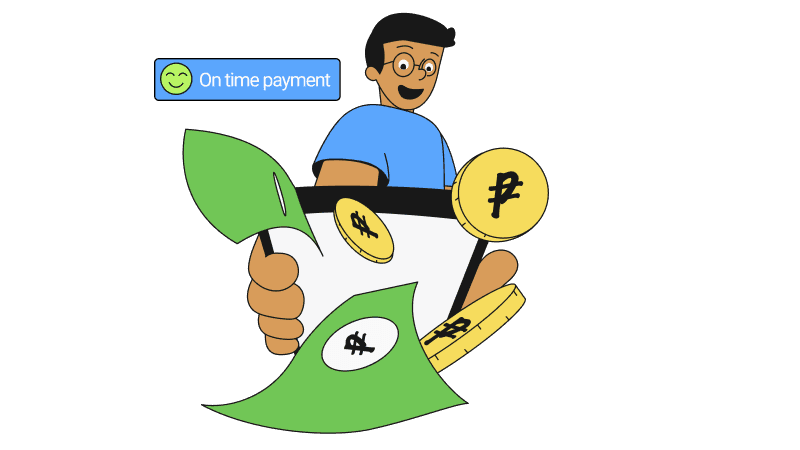
If you cannot pay this full amount by your due date, try to pay more than the minimum amount. This helps lower your balance and means less interest over time.
Now that you know the basics of credit card interest and the importance of paying on time, we hope you can spend smarter with your card.
Aside from physical credit cards, there are digital credit options that let you pay for your purchases later using your phone. Some even offer extra benefits while you spend, like SkyroCredit.
SkyroCredit is a digital credit you can apply for in the Skyro app, with a starting limit from ₱1,000 up to ₱10,000. Use it to pay anywhere QR Ph is accepted. Even better? You earn ₱1 back for every ₱100 spent, plus up to 45 days to pay later at 0% interest.
To learn more about SkyroCredit, just download the Skyro app and apply today.
Did this help?
Online Shopping Scams: 5 Red Flags to Know Before You Check Out

Tuition Is Just the Start: 5 School Expenses Parents Should Budget For

When It Rains, Expenses Pour: How to Prepare for Rainy Season Expenses